The simplest rule in security, and the hardest to staff.
An empty property is the cleanest monitoring job there is. There are no tenants, no customers and no shift changes. Any person on the site is an event. Yet vacant properties are among the most frequently hit: copper stripping, squatting, dumping, graffiti, arson and simple vandalism that turns a sellable building into a write-off.
The reason is economics. A full-time guard at an empty building is hard to justify, and a patrol drive-by once a night leaves hours of nothing. Cameras cover the gap only if someone is actually looking when a person shows up. For portfolios of vacant properties watched from one monitoring station, that is exactly where AI earns its place.
What kinds of property this covers.
- Vacant commercial buildings. Closed stores, empty offices and warehouses between tenants.
- Foreclosures and bank-owned homes. Held by lenders and asset managers until sale.
- Properties awaiting redevelopment. Buildings slated for demolition or renovation, before the construction crew arrives.
- Remote and rural sites. Unmanned lots, equipment compounds, pump houses and land parcels with no one nearby.
- Seasonal properties. Campgrounds, resorts and venues closed for the off-season.
What operators watch at a vacant site.
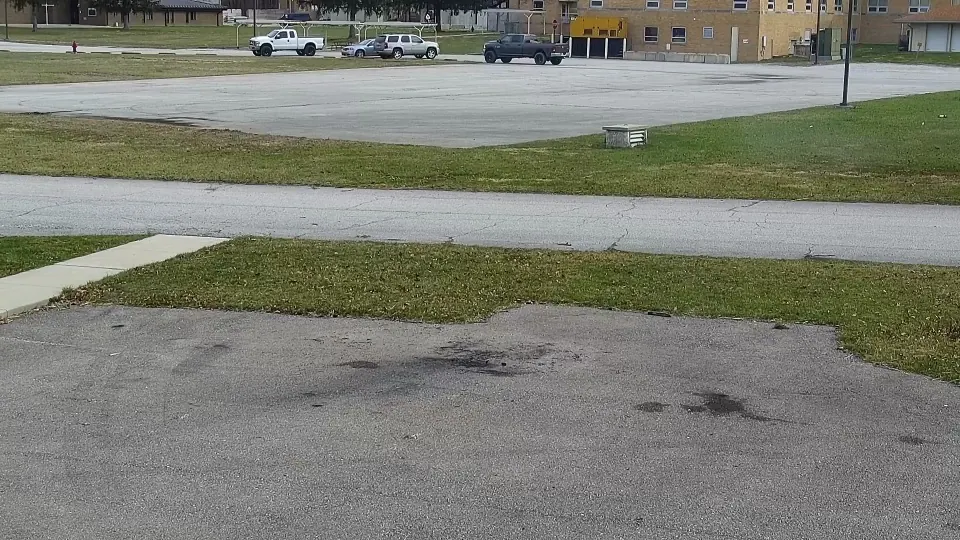
Camera setups are usually temporary or minimal: a few cameras on the building corners, a view of each entrance, sometimes a solar-powered mobile tower in the lot. The events that matter: any person on foot on the property; a vehicle pulling up to a loading door or behind the building; someone at a boarded window or door; a person returning to the same spot night after night, which often means squatting; a truck backing up to the lot to dump waste. The nuisance activity: deer, foxes and stray dogs, blowing debris and tarps, tree shadows under a streetlight, rain and snow on lenses, and the occasional passer-by on the public sidewalk.
Where vacant-site cameras fight the guard.
Vacant properties get the cameras nobody else wanted: older units, cellular links, solar power that cuts out on cloudy weeks. Views drop, freeze or go black. A monitoring center watching dozens of vacant sites cycles through them on a shared wall, so most views are off-screen most of the time. The danger is assuming a dark or missing view means a quiet site. Our guide to camera offline and coverage gaps covers how to handle that.
Semaphor is built to be honest about gaps. When a camera cycles off the screen, it is marked unobserved, never assumed quiet. The guard knows exactly which properties were actually watched and which were not.
Watch every property
Semaphor captures the monitoring screen, separates the panes and recognizes each property’s views as layouts cycle.
Any person is an event
Local person and vehicle detection ignores wildlife, tarps and shadows and reacts to people and vehicles.
Alert immediately
A preliminary alert lands the moment someone appears, then a scene report adds what they are doing.
How Semaphor fits a vacant property contract.
Vacant properties are where the “any person matters” rule makes AI monitoring most effective. There is no legitimate traffic to filter, so almost every person or vehicle Semaphor surfaces deserves a look. The guard sees the original frames beside an AI scene report describing what the person is doing (walking the perimeter, prying at a door, carrying material out), then decides whether to use a talk-down speaker, call the property manager or dispatch police. Our guide to after-hours trespassing covers typical post orders.
Semaphor works from the monitoring screen guards already use, which matters when every property has whatever camera the last owner left behind. No camera replacement, no new VMS, no integration project per site. Add a property to the wall and Semaphor starts watching it.
What your guards watch
- Boarded doors, windows and loading bays
- Empty parking lots and rear service areas
- Mobile camera towers on remote lots
- Dozens of properties cycling on one wall
- Cameras on unreliable cellular or solar links
What Semaphor surfaces
- Any person on foot on the property
- Vehicles stopping at doors or behind the building
- Repeat visits to the same spot over several nights
- Activity at boarded openings and utility areas
- Views that cycled away, marked unobserved rather than quiet
Evidence for owners, lenders and insurers.
Vacant property claims often hinge on proving when damage happened and whether the property was being monitored. Semaphor keeps every processed frame with its original image, an exact SHA-256 hash and perceptual hashes, exportable as JSON manifests. The evidence and audit trail shows both what happened and which views were observed.
Property managers can see how this scales across a portfolio on the property managers page. New here? Read what Semaphor is, then start a pilot on a handful of vacant sites, or book a live demo on your own camera screens.
Vacant property monitoring FAQ
Will wildlife trigger alerts at rural sites?
Semaphor reacts to people and vehicles rather than raw motion, so deer, foxes and blowing debris are far less likely to reach the inbox than with basic motion alarms.
What happens when a camera goes offline?
Views that are not on screen are marked unobserved, never quiet, so guards and property owners know which sites were actually watched.
Does Semaphor call police automatically?
No. The guard reviews the evidence and makes every dispatch decision.
Can we add and remove properties as they sell?
Yes. Semaphor follows the monitoring screen, so properties come and go as they appear on your wall. Talk to us about your portfolio.