What guards actually watch at an apartment community.
Multifamily properties spread cameras across a lot of small spaces: the main entry and leasing office, the package room or mailroom, the parking garage or surface lot, vehicle and pedestrian gates, trash enclosures, the pool and fitness center, and the stairwells and corridors inside each building. Garden-style communities add cameras on the walkways between buildings. Many properties have no on-site guard at night at all, so a remote monitoring team covers the cameras from a central station.
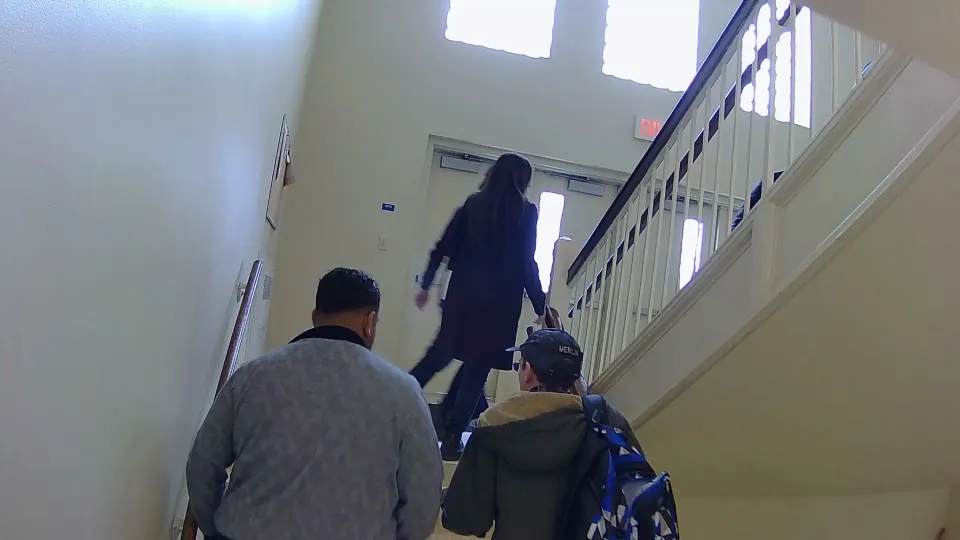
Residential post orders are different from commercial ones because people are supposed to be there around the clock. The question is never “is someone on camera,” it is “is this someone doing something that doesn’t belong”: a person going car to car in the garage, someone working through packages in the mailroom, a stranger tailgating a resident through the pedestrian gate, people using the pool after it closes, someone sleeping in a stairwell, a vehicle circling the lot at 3 a.m.
The events that matter, and the ones that don’t.
Most of what apartment cameras see is residents living their lives: walking the dog at midnight, carrying groceries, taking out trash, coming home from a late shift. Delivery drivers and rideshare pickups run all day and most of the night. A monitoring approach that treats all of it as suspicious drowns the guard and annoys the property manager.
What’s worth surfacing:
- A person lingering in the mailroom or package room, or returning to it repeatedly.
- Someone moving between parked cars in the garage rather than walking to one.
- Activity in amenity areas after posted hours: pool, gym, clubhouse, rooftop.
- A person stationary in a stairwell, corridor or trash room overnight. Our loitering detection guide covers how guards handle it.
- Vehicles stopping at gates or in fire lanes rather than moving through.
What your guards watch
- Main entry, leasing office and lobby.
- Mailroom and package lockers.
- Garage levels and surface parking.
- Pedestrian and vehicle gates.
- Pool, gym, trash rooms and walkways.
What Semaphor surfaces
- People and vehicles on every camera, tracked per view.
- Presence in amenity and back-of-house spaces when they should be empty.
- Still people in stairwells and trash rooms, kept in view through rechecks.
- An AI scene report that reads a resident walking a dog as routine.
- Evidence the property manager can use the next morning.
Why residential cameras are hard to monitor.
Lots of cameras, small spaces.
A single community can have more cameras than a warehouse, spread across dozens of small rooms and walkways that all look alike. Semaphor gives each camera view its own visual identity and follows it as the monitoring layout cycles, so the guard always knows which mailroom they are looking at. See camera view tracking.
Garages at night.
Parking garages combine low ceilings, columns that hide people, and harsh overhead lighting. The parking garages use case goes deeper on those cameras specifically.
Privacy expectations.
Residents are sensitive about cameras, and rightly so. Semaphor does not do facial recognition. Track numbers are local to a camera and describe activity, not identity. That makes it easier for property teams to explain monitoring to residents. Details in security and privacy.
Built for property teams and the guards they hire.
Property managers want to know what happened overnight without scrolling through hours of footage. Guards want fewer pointless alerts and more time on the ones that matter. Semaphor serves both: the guard works a guard inbox sorted by priority, acknowledges and closes events after review, and every event keeps the original frames beside the AI assessment. Those cards are the raw material for the morning report to the property manager.
No new cameras. No new VMS. Semaphor works from the monitoring screen your team already watches, so a portfolio of different properties with different camera systems can be covered from the same station.
How it fits your operation.
Read what Semaphor is for the full loop. Portfolio owners and management companies should see Semaphor for property managers; gated single-family communities fit better with HOA and gated communities.
Units between tenants or buildings awaiting renovation need a different watch. See vacant property camera monitoring.
Apartment monitoring FAQ.
Residents are out at all hours. Won’t it flag every one of them?
People are detected, but the AI scene report and priority levels separate ordinary resident activity from events worth review, and duplicate suppression keeps one event to one card.
Does it identify residents or visitors?
No. There is no facial recognition and no identity matching. Semaphor reports what is happening on each camera, and the guard decides what it means.
Our properties use different camera systems. Is that a problem?
No. Semaphor observes the rendered camera views on your monitoring screen, so it doesn’t matter which VMS or camera brand each property runs.
Covering residential properties from a monitoring station? Book a live demo or start a pilot.