What it is.
Every guard knows the pattern. A car parks under a camera at 10 p.m. and the system alerts on it. Then again. And again, every few minutes, until the guard stops opening alerts from that camera at all. That is how real events get missed: not because nothing flagged them, but because the flag looked like the forty before it. Semaphor attacks the problem at the source with event routing: a layer between detection and the inbox that suppresses duplicates, spaces out reviews with cooldowns and re-arms a camera when genuinely new activity appears.
Why it matters.
Alert fatigue is a security risk.
Nuisance alerts do not just waste time. They train guards to dismiss alerts without looking. Keeping repeats out of the inbox protects the guard’s trust in every card that does arrive. Our guide to reducing nuisance alerts covers the operational side.
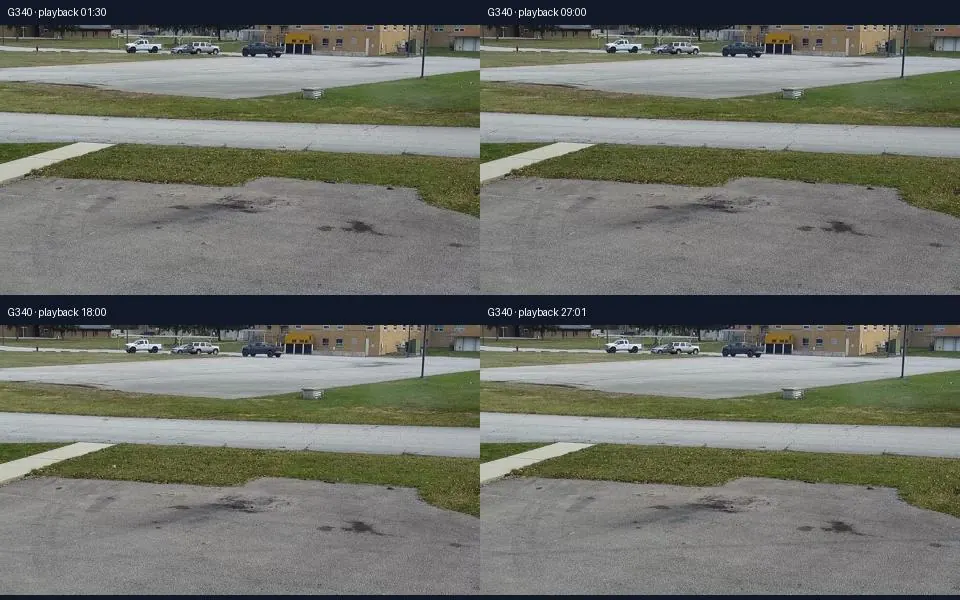
New activity still gets through.
Suppression that hides everything is worse than none. Semaphor’s routing is built so that a new person walking up to that same parked car is a new event, and activity held during a cooldown waits with its evidence instead of being dropped.
AI capacity goes where it counts.
Every duplicate kept local is an AI review that does not have to run. That keeps scene reports fast for the events that are actually new.
How it works.
Propose candidates.
Local person and vehicle detection and pixel-change checks propose candidate events on each camera view.
Fingerprint and compare.
Each candidate gets a fingerprint from appearance hashes, coarse object positions and trigger type. A fingerprint that was already reviewed does not alert again.
Cool down and re-arm.
Reviews are spaced per camera. Distinct quiet observations re-arm the view, so returning activity is treated as new.
Filtering before the candidate.
Some noise never becomes a candidate. Pixel comparisons remove uniform brightness shifts — clouds, auto-exposure, lights switching on — and ignore tiny changes and the edge text drawn on tiles, like timestamps and camera names. Substantial, connected changes and actual people and vehicles are what move forward.
Duplicate fingerprints.
The parked car that alerted once, and was reviewed, produces the same fingerprint on the next sample: same appearance, same place, same trigger. Semaphor recognizes it and keeps the check local. No new card, no new AI review.
Cooldowns without losing evidence.
A camera that just had a review waits a short cooldown before its next one. If something changes during that window, the candidate is held in a durable job with its original frames pinned — later quiet frames cannot overwrite it — and it is reviewed when the cooldown ends. Nothing is thrown away just because it arrived early.
One open incident per camera.
Repeated activity on a camera with an open card updates that card instead of creating another. After a guard closes a card following review, repeated review-level activity gets a short cooldown, while new urgent activity bypasses it. The guard inbox stays a list of situations, not a log of every frame.
Resets when the camera changes.
If a tile switches to a different camera, duplicate state resets. Suppression from one view never leaks into another. That depends on camera view tracking knowing which camera is which.
Where it matters.
- Apartment and residential properties — resident cars parked in the same spots every night.
- Marinas — moored boats, reflections and moving water that make simple motion alerts unbearable.
- Solar farms — long, static perimeters where the same maintenance vehicle can sit in view for hours.
How much quieter does it get? It depends on your cameras and your sites, so we measure nuisance alerts on your own stations during a pilot.
Frequently asked questions.
Will duplicate suppression hide a real event?
Suppression is keyed to the same appearance, position and trigger that was already reviewed. New people, new vehicles and changed scenes produce new fingerprints, and new urgent activity on a closed camera bypasses its cooldown.
How is this different from turning down motion sensitivity?
Lower sensitivity misses small real events everywhere. Duplicate suppression keeps full sensitivity and only skips activity Semaphor has already surfaced and reviewed.
Does a closed alert stop that camera from alerting?
No. Closing adds a short cooldown for repeated review-level activity; urgent activity still comes through immediately, and the camera re-arms once it has been observed quiet again.
See the difference on your noisiest camera: book a live demo.